



Italy Blocks Odnoklassniki and VKontakte

Italian government blocks access to Russian social networks
VKontakte Blocked
The issue stems from a complaint filed by the company Mediaset against VKontakte for hosting a film in free access. The company accused VKontakte of piracy. Consequently, internet service providers gradually began blocking access to the site. For some time, users could still access it from mobile devices. The Rome court ordered several dozen websites to be added to the blacklist, including vk.com.

The website's support team suggests changing your computer's DNS address to bypass the block. It's best to switch to Google's DNS, such as 8.8.8.8. You can also try accessing VKontakte through a free anonymizer. Currently, there are several anonymizer options available.
Many VKontakte users are outraged by this decision from Roman authorities, as it is a social network used by a million people in Italy to stay connected with their families. Twitter posts revealed that the block occurred due to the distribution of the film "The Sun Shines Like Rain," which belongs to Silvio Berlusconi's media corporation.
What Happened to Odnoklassniki in Italy?
In mid-November, Italian residents were unable to access the Russian website Odnoklassniki. When attempting to visit the site, a notification appeared stating that access had been disabled by the Security Authority in accordance with resolution No. 680/13/CONS. Users were shocked and unsure of the reason for the block. The only known fact is that the site was blocked by decision of agcom due to violation of legislation, but the government has provided no comments.
By visiting the Agcom.it website, you can learn the true reason for the block – Odnoklassniki's distribution of copyright-protected content. Access is closed through DNS blocking under resolution No. 229/17/CSP. However, you can try to bypass the block using an Odnoklassniki anonymizer.
How to Bypass the Block Using an Anonymizer?

An anonymizer is an intermediary node between the target resource and the user. It is used for anonymous web browsing and accessing blocked websites. It helps bypass blocks. When opening a site, the request is sent to your provider, where the site's name and IP are checked against a blacklist of resources. If access to the webpage is open, the request is forwarded to the target server, and content is loaded. If it's closed, the provider sends users to a placeholder page. Different providers have different placeholder pages, but the purpose is always the same – to inform the user that access to the site is prohibited.
When accessing the node through an anonymizer, the provider only sees the anonymizer's data, and since it is not on the blacklist, loading of the target resource is not restricted. Using it is very simple – just open its page and enter the address of the desired website. However, many anonymizers are now banned, leaving only the simplest ones to access Odnoklassniki and other social networks. A more serious solution is needed.
Access Blocked Sites Using VPN
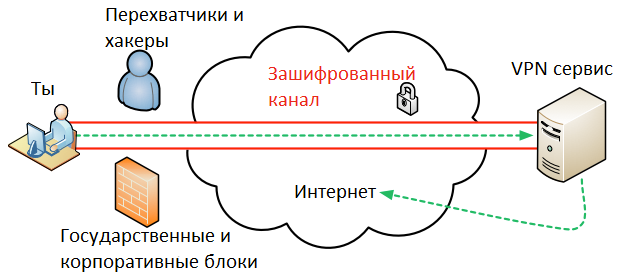
A VPN's primary purpose is to create secure communication channels to protect network traffic from external access and data leaks. However, VPN server addresses are often used to access blocked websites. Unlike anonymizers, which redirect requests to one specific site, VPNs route all network traffic through an encrypted tunnel. At RocketVPN, you can bypass blocks with a VPN at an affordable price.